

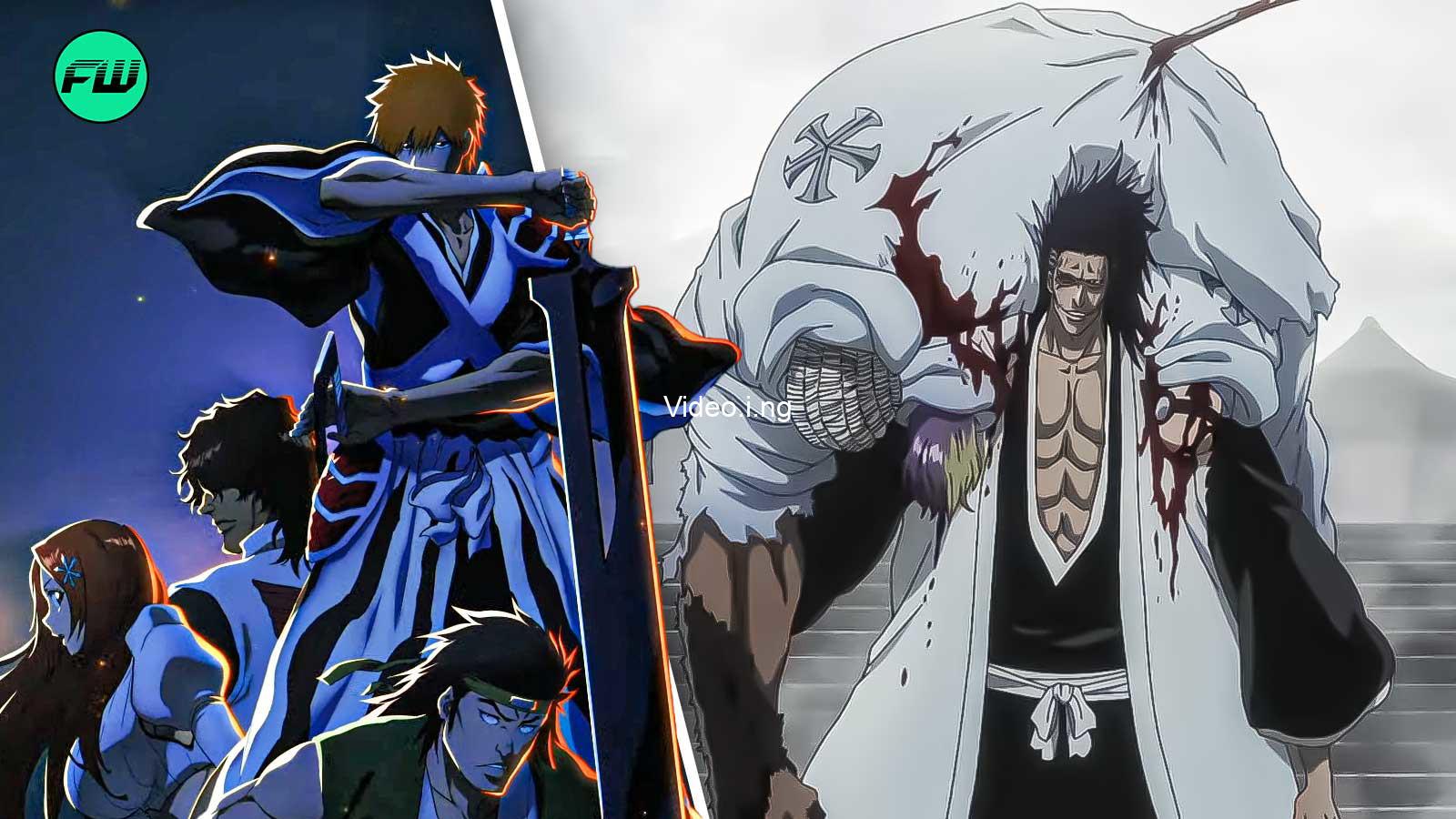
Bleach: Thousand-Year Blood War anime has been airing one splendid episode after another. The anime adaptation of the last arc of Tite Kubo’s Bleach has received plenty of praise from fans. The TYBW anime has various anime original scenes, which rather than taking the focus away, adds to the major elements of the plot.
Despite everything, fans have been upholding Tite Kubo’s original Bleach manga and anime as the holy grail. But one scene in Bleach: Thousand-Year Blood War is bound to make any fan turn around and admit just how great Studio Pierrot’s creation is.
The scene that makes Bleach: Thousand-Year Blood War superior to Tite Kubo’s original series
Bleach: Thousand-Year Blood War already had fans under a death grip with its modern animation technique. Additionally, the series also included plenty of anime original scenes to keep fans of the franchise hooked. This way, even manga readers had to keep up with the anime so that they wouldn’t miss out on newly added scenes.
Related ‘Just him trying to keep his facade together’: Tite Kubo’s Real Genius With Byakuya Makes Him the Best Written Bleach Character That Deserves More Respect
But one particular scene in the Bleach: Thousand-Year Blood War anime is bound to take your breath away and admit that the sequel series has risen above Tite Kubo’s creation. The scene in question is the debut of Rukia‘s Bankai in episode 6 of Bleach: TYBW Part 2. The most important moment in this episode came when Rukia achieved her Bankai, and assumed a beautiful outfit.
The Bleach Manga vs The Anime pic.twitter.com/N1AidS2dwc— Dani | Bleach 🩸 (@ichigod22) August 13, 2023
anime did it better had to clean my screen after seeing this ngl pic.twitter.com/eOopmt3kdD— lebron james enthusiast (@Mugiwarasng) August 13, 2023
Rukia’s Bankai changed both her physical look and the clothes that she wears dramatically, which was already visible in the manga. However, the anime version added the oomph factor that every fan was craving. In the manga, Rukia is simply portrayed as wearing a white robe, but in the anime, she wears an ethereal kimono that shimmers in a strange light blue hue.
The robe has elements made out of transparent ice, which can make anyone gasp at her. Her hair and irises become white, while her blade is also made out of transparent ice.
Rukia’s Bankai was breathtaking in Bleach: Thousand-Year Blood War
The name of Rukia’s Bankai is Hakka no Togame. It dramatically increases the area that Rukia’s ability has an influence on. Within this area, a temperature of Absolute Zero is reached. The first time that Rukia debuts her Bankai is against Nodt, a Quincy who is a member of the Wandenreich’s Sternritter with the designation F.
Related Tite Kubo Took the Worst Problem in Bleach and Amped It Up To Kingdom Come in Thousand-Year Blood War
When Rukia released her Bankai, a pillar of cold mist rose up into the air to reach her. She could also release a massive wave of freezing cold by just lifting her blade towards her opponent.
Rukia’s Bankai in Bleach: Thousand Year Blood War | Credits: Studio Pierrot
This move can freeze absolutely anything in its path. If her opponent makes physical contact with Rukia, they would also begin freezing solid due to how cold her body is when she uses Bankai.
I think I speak for everyone when I say the anime clears in every aspect— Rinze™ (@ChefRinze) August 13, 2023
One of thing I love about the Bleach anime is how 1:1 it is with the manga. They made it look even better honestly😊— Main (@mainmajin) August 14, 2023
Studio Pierrot went above and beyond while animating Rukia’s Bankai and fans were extremely impressed by it. It was visible from their reactions that no one expected such a stark difference in the depiction between Tite Kubo’s manga and the Bleach: Thousand-Year Blood War anime. Nonetheless, the series successfully awed fans and took home the award for one-upping Tite Kubo.
Bleach manga is available to read on Viz Media, and the anime is currently streaming on Crunchyroll. Bleach: Thousand-Year Blood War is available to watch on Disney+.
This post belongs to FandomWire and first appeared on FandomWire