

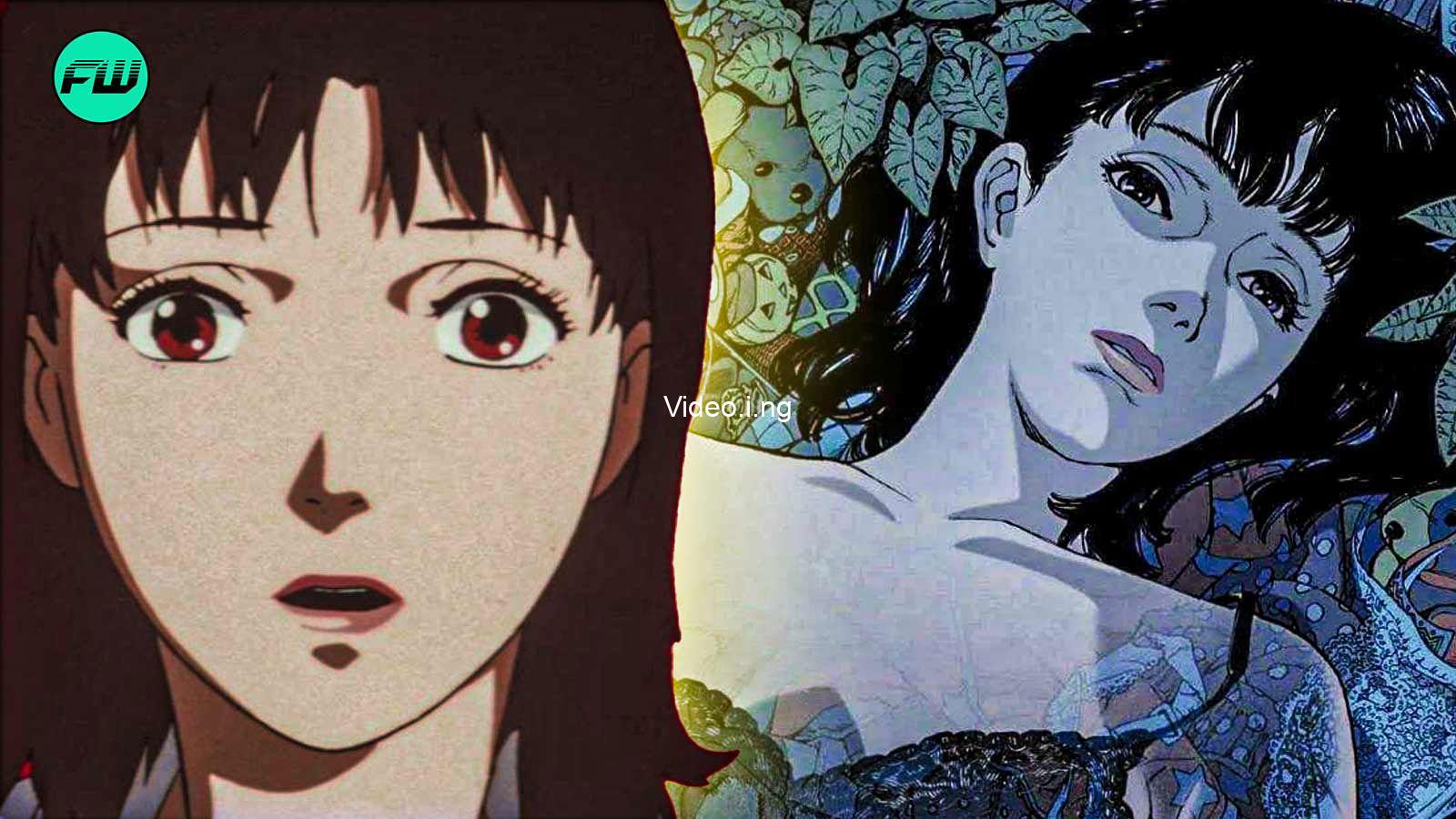
Satoshi Kon has marked his place in the world of psychological horror and mystery in the film industry. With just four films in his portfolio before his passing, the late director’s arguably best film, Perfect Blue, is still a hot topic of several debates. Fans love to analyze and pick the film apart.
In an interview with Kon, he mentioned that the film might have also worked with a male protagonist. According to him, it would have been relevant to the Japanese climate but to the taste of the Japanese animation audience, a younger girl was kept at the protagonist. Now, why was Perfect Blue (literally) perfect with the female main character in ways more convincing than a male main character would’ve been? Let’s dive into why Mima Kirigoe is irreplaceable.
Mima Kirigoe’s Story Embodies What’s Wrong with Parasocial Idol-Fan Culture
Mima’s performance in Satoshi Kon’s Perfect Blue. [Credit: Madhouse]
The interview in question asked the late director if he could’ve told a similar story with a male celebrity:
“I think so. Especially in the current Japanese climate, a story featuring a male celebrity would be more convincing. However, taking the Japanese animation audience into consideration, I think it’s more easily acceptable to feature a young, cute girl as the main character.“
While Satoshi Kon is valid in bringing up the Japanese idol climate and how male celebrities are treated very similarly, it also ignores the severity of how women in the idol industry have much higher expectations. Mima Kirigoe is the embodiment of what it’s like to be a woman in the industry.
RELATED“It’s a pitiful tale”: Satoshi Kon Didn’t Mince His Words for the Oscar Nominated Hollywood Adaptation of His Best Film
The idol is initially a part of a Japanese pop group called CHAM! but she leaves to become a full-time actress. Her decision came under huge scrutiny, with fans becoming increasingly aggressive towards her. A particular man, Mamoru Uchida or Me-Mania, begins to stalk her.
Me-Mania attacking Mima in Satoshi Kon’s Perfect Blue. [Credit: Madhouse]
However, this shows how fans expected her to maintain a clean-cut or pure image rather than be happy with what Mima wanted to do with her career. Even the twist of the movie, the identity behind “the real Mima” is a reflection of what happens when parasocial relationships go too far.
In a very brutal scene in the movie, Me-Mania attacks Mima in her studio. Despite acting under instructions from “the real Mima”, Me-Mania’s actions are nothing short of disturbing. It reflects the real-life incident of Ena Matsuoka, a former member of Tenshi Tsukinukeni Yomi, whose stalker tracked her address down and attacked her. What’s happened to Mima has happened several times in reality.
Perfect Blue’s Depiction of the Male Gaze and the Female Identity
The iconic train scene in Satoshi Kon’s Perfect Blue. [Credit: Madhouse]
When Mima decides to become a full-time actress, her first role in a movie involves her getting assaulted. Despite her consent, this leaves her distraught and changes the image she has of herself. Her audience’s image of her becomes everything she sees. She begins seeing reflections of her former pop idol self. Like most psychological thrillers, it makes you question her sanity and if the narrator is reliable. Her assault scene has “tainted” her; she can never go back to her “pure” self in the eyes of the media.
Her assault scene, while fake, reflects what women go through in reality when losing their virginity. Society believes they’ve lost their innocence, and it tarnishes their image. This is exactly what happened with Mima after her assault scene. Her reputation changed and so did her psyche, all for the sake of the male gaze and to be taken seriously as an actress. So, no, especially in that scene, Perfect Blue would not have worked with a male protagonist.
RELATED“Women like the ones in anime don’t really exist in reality”: Satoshi Kon Dropped a Truth Bomb About Mangakas Writing Female Characters That Has Come Under Intense Scrutiny
Perfect Blue is available on Crunchyroll.
This post belongs to FandomWire and first appeared on FandomWire